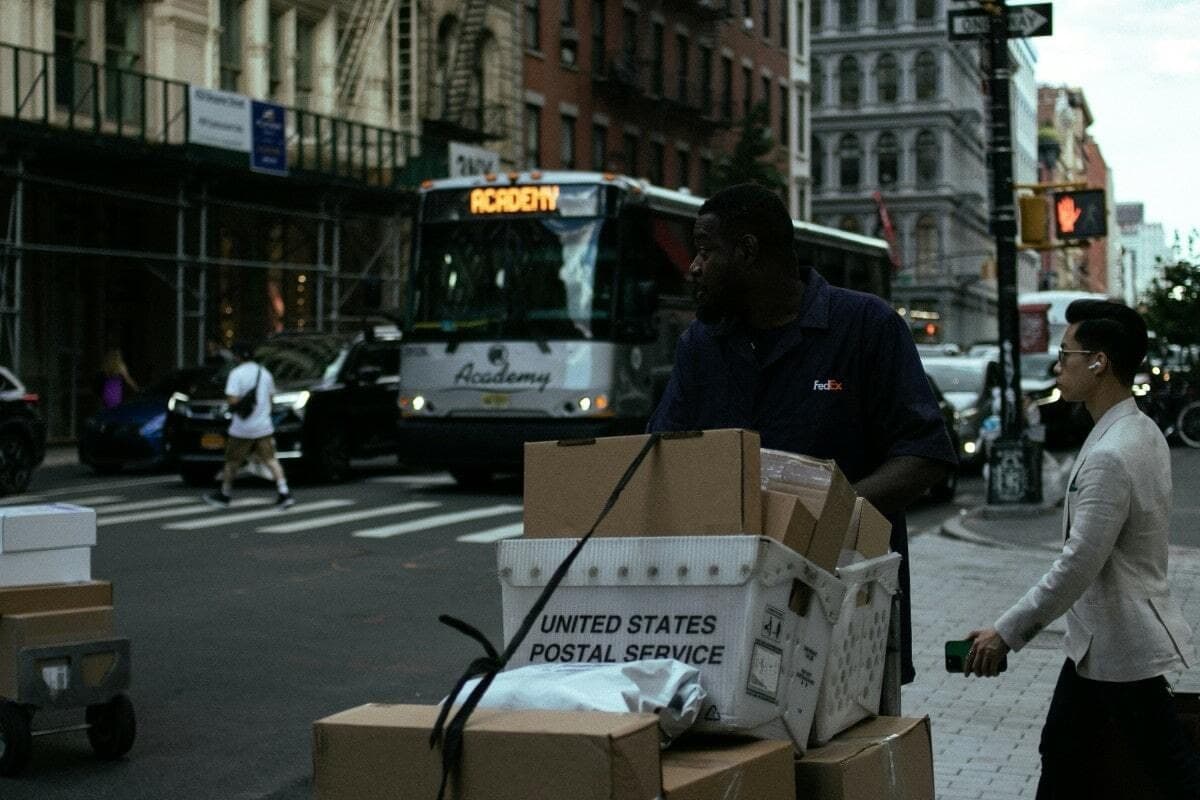
New York City, a global epicenter of commerce and culture, thrives on its relentless pace and constant flow of goods. However, for residents of Lower East Side – encompassing a vibrant stretch of the Lower East Side and Chinatown – this urban dynamism often translates into a recurring nightmare: the daily struggle of package delivery.
From the bustling streets to the dense residential buildings, a confluence of factors conspires to make receiving online orders a high-stakes endeavor, riddled with package theft, missed deliveries, and logistical frustrations.
Tired of missed deliveries or stolen packages?
Package receiving services offer a secure and hassle-free solution—no more worrying about porch pirates or “sorry we missed you” slips.
Try it free for a month and enjoy the ease of picking up your packages from a trusted, nearby location at your convenience.
The Landscape of Lower East Side: A Snapshot
Lower East Side is a densely populated and historically rich area of Manhattan. According to the U.S. Census Bureau, as of recent estimates, the total population hovers around 82,155 individuals, residing in approximately 35,771 households.
This high residential density, coupled with a significant portion of multi-unit dwellings and walk-up apartments, creates a unique environment for package delivery. Unlike suburban areas with individual porches, many residents lack secure, private spaces for deliveries, leaving packages vulnerable.
The median household income in 10002 is around $46,525, indicating a diverse economic landscape where online shopping has become an increasingly integral part of daily life for many.
The Pervasive Problem: Package Theft and Missed Deliveries
The challenges faced by 10002 residents are not isolated incidents but rather a microcosm of a larger city-wide issue. New York City consistently ranks among the worst metro areas for package theft.
In 2023, New York City experienced an estimated $945.1 million in losses due to package theft, with nearly six in ten households targeted. This alarming figure underscores the sheer scale of the problem. While exact statistics for 10002 specifically are harder to isolate, its urban density and building types make it particularly susceptible.
Sources and Statistics Confirming the Issue:
- City-wide Impact: Reports indicate that 80% of households in New York City receive at least one delivery per week, and a staggering 90,000 packages are reported stolen or lost in transit daily across the city. This is largely attributed to many buildings lacking secure delivery areas. (NYC.gov)
- National Trends Reflecting Urban Vulnerability: Nationally, package thefts totaled 120.5 million in 2023, with urban residents being 35.9% more likely to experience package theft compared to the average American. This highlights a clear correlation between urban living and increased risk. (Capital One Shopping, 2025)
- Frequent Victimization: The same report from Capital One Shopping notes that 79% of package theft victims have lost more than one parcel, suggesting a pattern of recurring issues for affected residents.
- Carrier Specific Thefts: While Amazon deliveries account for the largest share of reported thefts (33%), USPS (18%), FedEx (17%), and UPS (16%) deliveries also frequently fall victim to "porch pirates." This indicates that the problem is not limited to one carrier but is systemic. (SafeWise, 2024)
For residents in 10002, the typical scenario involves packages being left in unsecured lobbies, hallways, or even directly on the street, especially in buildings without doormen or dedicated package rooms.
This makes them easy targets for opportunistic thieves. Beyond outright theft, missed deliveries are a constant headache. Drivers, under pressure to meet tight schedules in a congested urban environment, may attempt deliveries when residents are not home, leading to "failed delivery" notices, rerouting to distant depots, or the dreaded "delivered but not received" status.
The lack of available parking and loading zones in dense areas like 10002 further exacerbates this, often forcing drivers to double-park or block traffic, leading to rushed deliveries and increased errors.
The Root Causes: Why Lower East Side is a Hotspot
Several interconnected factors contribute to the chronic package delivery issues in Lower East Side:
- High Residential Density and Multi-Unit Dwellings: The prevalence of apartment buildings, many of which are older walk-ups, means a high concentration of residents with limited secure reception points for packages. Unlike single-family homes, there's often no "porch" to leave a package on safely.
- Lack of Secure Delivery Infrastructure: Many older buildings were not designed with modern e-commerce volumes in mind. Few have dedicated package rooms, smart lockers, or even a secure vestibule. This leaves carriers with few options other than leaving packages in communal areas.
- Traffic Congestion and Parking Limitations: The Lower East Side is notoriously busy. Delivery drivers face immense pressure to navigate traffic, find legal parking, and complete deliveries quickly. This often leads to hasty drop-offs in unsecured locations, or missed attempts if a driver cannot find a suitable spot. The Manhattan Borough President's Office (MBPO) highlights how delivery vehicles often illegally double-park or block lanes to sort and unload parcels, contributing to congestion and safety issues.
- High Volume of Deliveries: As online shopping continues its boom, the sheer volume of packages entering Lower East Side daily overwhelms existing delivery infrastructure and resources. The MBPO report notes around 34,700 e-commerce packages delivered per square mile in Manhattan south of 60th Street, with a significant portion going to residential addresses.
- "Last-Mile" Challenges: The "last mile" of delivery, from a distribution hub to the customer's doorstep, is the most complex and costly part of the supply chain, accounting for over 50% of total shipping costs. In dense urban areas like 10002, these challenges are magnified by the very factors listed above.
Available Alternatives forLower East Side Residents
Frustrated by the constant struggle, residents of 10002 have explored various alternatives to ensure safe and reliable package receipt:
Carrier-Specific Hold Locations:
- UPS Stores: Locations like The UPS Store at 118A Orchard St (within 10002) offer private mailbox services that come with a real street address, secure package acceptance from all carriers, and mail holding/forwarding. This provides a professional and secure alternative to home delivery.
- FedEx Office Locations: Similar to UPS, FedEx Office locations allow customers to have packages held for pickup.
- USPS General Delivery/PO Boxes: While less flexible for general package receipt, USPS offers PO Boxes and General Delivery services for those who prefer to pick up mail directly from the post office.
Third-Party Locker Systems:
- Amazon Hub Lockers: Amazon has installed lockers in various retail locations across NYC, including some within or near 10002. These provide a secure, self-service option for Amazon deliveries.
- LockerNYC (Pilot Program): The City of New York has launched LockerNYC, a pilot program to combat package theft by providing secure, shared-use locker programs. While still in its early stages, this initiative aims to expand secure pickup options for all New Yorkers.
Workplace Delivery: For those working in offices that allow it, having packages delivered to their workplace can be a viable solution, especially if the office has a secure mailroom or reception area.
Neighborly Assistance/Building Managers: In some smaller buildings or close-knit communities, neighbors might coordinate to accept packages for each other. Building managers or superintendents, where available, can also sometimes act as a point of contact for deliveries, though this is often an informal arrangement and can be burdensome for them given the volume.
Direct Delivery Instructions: Some residents attempt to leave specific delivery instructions for carriers (e.g., "leave with doorman," "hide behind bush"), but these are often overlooked or impractical in urban settings.
While these alternatives offer some relief, they often come with their own set of limitations. Carrier hold locations may not be conveniently located or have limited hours. Locker systems are often specific to one retailer. Relying on neighbors or building staff is not a scalable or consistently reliable solution.
Stowfly: A Targeted Solution for Lower East Side and Beyond
Amidst these challenges, innovative solutions are emerging to directly address the pain points of urban package delivery. Package receiving services by Stowfly is one such service, specifically designed to offer a secure, convenient, and affordable alternative for package receiving and storage in high-density urban areas like New York City, including Lower East Side.
How Stowfly Works:
Stowfly operates as a network of trusted local shops and stores that partner to serve as secure package storage points. The process is straightforward:
- Find a Nearby Location: Users search on the Stowfly website or app to find a convenient partner location near their home or office in 10002.
- Purchase a Plan: Stowfly offers flexible subscription plans (e.g., basic tier for up to 5 packages per month, premium for up to 15 packages), providing users with the shipping address of their chosen location and a unique PIN.
- Use as Shipping Address: When ordering online from any e-commerce website (Amazon, USPS, UPS, FedEx, etc.), users simply use the provided Stowfly location's address as their shipping address.
- Notification and Pickup: Once the package arrives at the Stowfly location, the user receives a notification. They can then pick up their package at their convenience during the store's operating hours, simply by showing their unique PIN to the store owner.
Key Benefits of Stowfly for Lower East Side Residents:
- Combatting Package Theft: By redirecting deliveries to a secure, manned location, Stowfly effectively eliminates the risk of "porch piracy." Packages are no longer left exposed in lobbies or on sidewalks.
- Eliminating Missed Deliveries: Residents no longer need to worry about being home to accept a package or dealing with redelivery attempts. Packages are securely held until they are ready to pick them up.
- Convenience and Flexibility: With numerous locations across NYC, including those likely within easy reach of 10002, Stowfly offers convenient pickup points. Flexible pick-up hours align with the operating hours of local businesses, often extending beyond traditional post office hours.
- Acceptance from All Carriers: Unlike some locker systems that are brand-specific, Stowfly accepts packages from all major carriers (UPS, FedEx, USPS, Amazon, etc.), making it a comprehensive solution for all online purchases.
- Affordable Pricing: With subscription plans starting as low as $7.50 for5 packages per month, Stowfly presents an economical alternative compared to the financial and emotional cost of lost packages or stolen packages.
- Insurance Coverage: Stowfly also offers insurance on stored packages (e.g., $1,000 insurance), providing an added layer of peace of mind.
- Supporting Local Businesses: The model benefits local shops by driving foot traffic and offering a supplemental income stream.
For residents of Lower East Side, Stowfly represents a practical and much-needed solution to a pervasive urban problem. It transforms the anxiety of waiting for a delivery into a secure and predictable experience, allowing them to fully embrace the convenience of online shopping without the associated risks.
Conclusion
The challenges of package delivery in New York City's Lower East Side are deeply entrenched, stemming from a combination of high urban density, insufficient secure infrastructure, and the sheer volume of e-commerce.
Package theft and missed deliveries are not just nuisances; they represent significant financial losses and a considerable source of stress for residents. While traditional alternatives exist, they often fall short in addressing the multifaceted nature of the problem.
Package receiving services like Stowfly are stepping in to fill this critical gap, offering a scalable, secure, and user-friendly solution. By leveraging local businesses as trusted package receiving centers, Stowfly empowers residents of Lower East Side to reclaim control over their online deliveries, transforming a daily frustration into a seamless and secure experience. As e-commerce continues its upward trajectory, such innovative "last-mile" solutions will be indispensable in ensuring that the convenience of online shopping doesn't come at the cost of peace of mind for urban dwellers.