
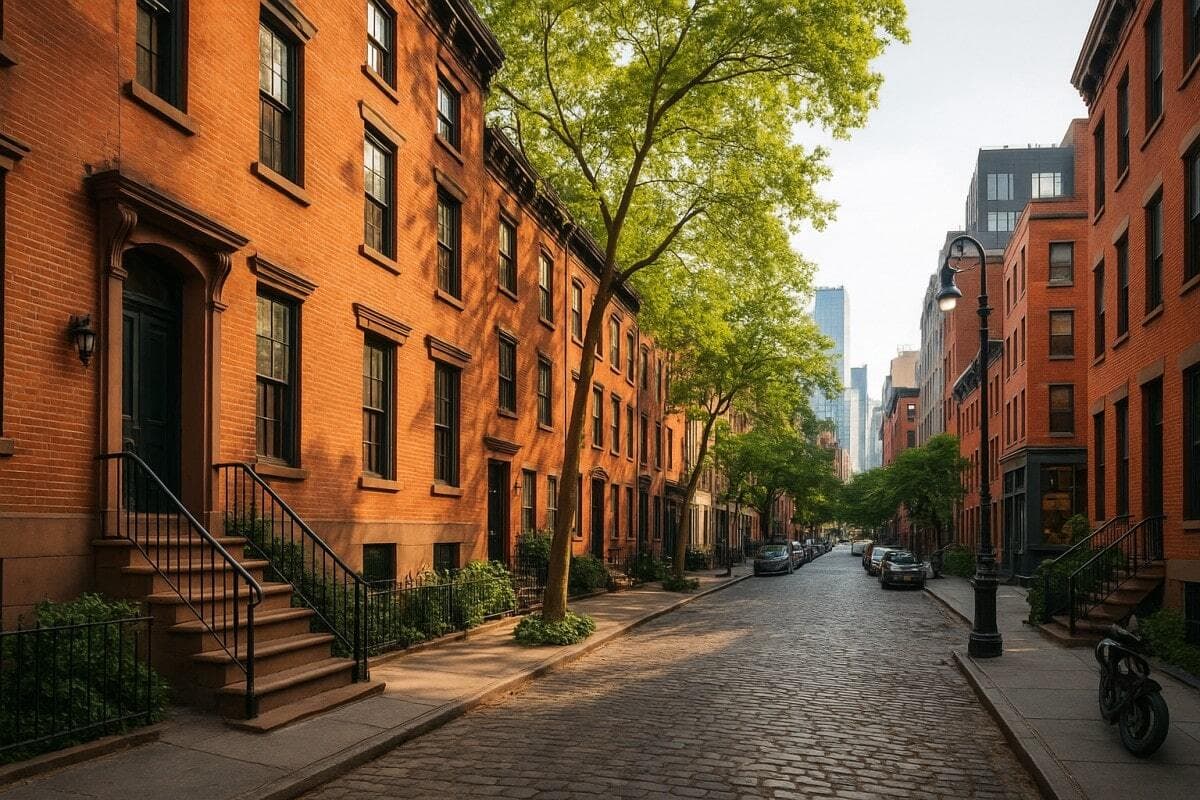
Together, the Meatpacking District, Greenwich Village, and the West Village form one of Manhattan's most sought-after, eclectic collections of homes. Combined, they offer a living quilt of history, creativity, and rebirth.
The West Village has its slender, tree-lined streets and historic brownstones tenderly restored or rebuilt as hip homes. Lofts recycled in tucked-away areas provide a modern touch of glamour without trading on old-fashioned character. Greenwich Village, long identified with intellectualism and counter-culture, notoriously defies Manhattan's grid street pattern, its convolutions calling up the past of organic development rather than deliberate city planning. Its artist, writer, and activist past continues to define it.
The Meatpacking District is a story of transformation of a different kind. What had been a gritty industrial neighborhood with warehouses and meatpacking houses has been reconverted into a playground for high style, upscale dining, and cutting-edge art galleries. Cobblestone streets and glass architecture stand side by side, mixing together a district where trendy and historic meet.
The population composition of such communities is as varied as the manner in which they are designed. Greenwich Village and West Village are havens for established homes looking for a residential experience, along with academics, artists, and the LGBTQ+ community, many of whom have strong ties in the area. Old-timers abound on the streets alongside an influx of newcomers attracted by the character and cache of the neighborhood. Life there is expensive. For the Greenwich Village/SoHo community, the median gross rent was $3,630 in 2023, as estimated by the Furman Center. Studios are typically $3,000–$4,000 a month, and one-bedroom apartments usually fetch more than $4,000.
The Meatpacking District, on the other hand, is hip and transient in nature. It has hipsters, artists, and fashionistas who desire access to nightlife and upscale living. Penthouses and high-end condos dominate, serving those with the wallet who value design and convenience. Luxury real estate is exploding in the area.
The West Village has witnessed record-breaking sales of multi-million-dollar duplexes, boutique condo buildings like 140 Jane Street and 80 Clarkson Street, and amenities such as private gardens, indoor pools, and wine cellars for the residents. Redevelopment is reshaping the cityscape in the Meatpacking District. The proposed revitalization of Gansevoort Market to "Gansevoort Square" will bring 600 mixed-income rentals, half of which will be affordable, along with a pavilion, cultural facilities, and enhanced public amenities.
Cultural heritage is deeply interwoven within the communities. Greenwich Village's bohemian history entails being the site where the contemporary LGBTQ+ rights movement started, the Beat Generation gained roots, and innovative performance art evolved. West Village has quaint boutiques, independent bookstores, and cute cafes that have become pillars of the community.
The Meatpacking District, though, is a draw to locals and tourists alike. The High Line, an elevated rail line repurposed as an urban park featuring city vistas and seasonal art installations. The Whitney Museum is growing its programming, and the neighborhood is an arts destination. Hip restaurants, rooftop bars, and high-end boutiques make the district a hot spot for fashion and nightlife.
From activist heritage to design well in advance of its time, these downtown havens capture the character of a city that survives on preservation as well as rebirth equally, and therefore are some of the most desirable addresses in New York City to call home.